Rainbow Holographic Foil Texture Vector: Your New Design Secret Weapon
That feeling when you see a design that just sparkles with modern energy? More often than not, it's not just clever color choices. It's the subtle magic of a premium texture, and the Rainbow Holographic Foil Texture Vector is one of the most versatile and impactful design assets you can add to your toolkit. Forget flat, one-dimensional backgrounds. This is about injecting a dynamic, light-bending quality into your projects that feels both futuristic and luxurious.
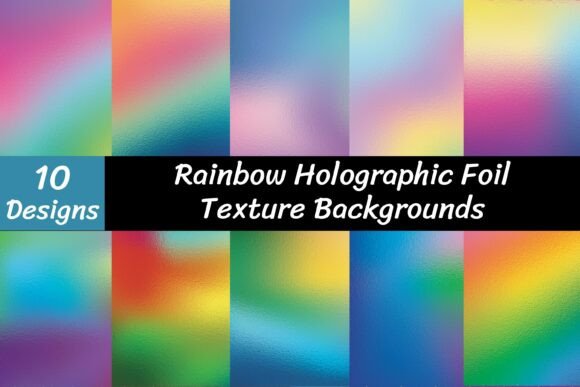
So, what exactly are we looking at? This isn't a simple gradient. A true holographic foil texture, especially in a vector format, mimics the way light refracts and shifts across a metallic, iridescent surface. You get those signature prismatic colors—soft pinks, electric blues, vibrant greens, and shimmering golds—that seem to move as you change your perspective. The "glass effect" adds a layer of depth and clarity, making the texture feel like it's encased in a polished, transparent layer. The result is a background or overlay that feels tactile, premium, and utterly contemporary. It’s the visual equivalent of a sleek, futuristic phone case or the cover of a high-end cosmetics box.
Where This Holographic Background Truly Shines
The applications for a Rainbow Holographic Foil Texture Vector are surprisingly broad, spanning both digital and physical realms. Its personality is bold, playful, and tech-savvy, making it ideal for projects that need to stand out in a crowded visual landscape.
- Branding & Logo Design: Use it as a subtle accent or a bold background for a logo mark. It’s perfect for tech startups, beauty brands, creative agencies, and any business wanting to project innovation and a cutting-edge aesthetic. Imagine a fintech app icon or a beauty brand's social media avatar with this texture—it immediately signals modernity.
- Marketing & Social Media: In the fast-scroll of Instagram, TikTok, or Pinterest, a holographic background is thumb-stopping gold. Use it for story backgrounds, post templates, banner ads, or email headers. It adds instant visual interest to promotions, product launches, or announcement graphics, ensuring your message doesn't get lost.
- Packaging & Product Design: This is where the texture truly excels. Apply it to product boxes, labels, shopping bags, or cosmetic packaging. It creates a shelf presence that’s impossible to ignore, conveying a sense of premium quality and innovation. It’s especially effective for limited editions or special series.
- Web & UI Design: While a full-page holographic background might be overwhelming, using it for hero sections, feature cards, button accents, or loading screens can create powerful focal points. It pairs beautifully with clean, modern sans serif fonts to balance its vibrancy.
- Print & Editorial Design: For magazine covers, poster art, business cards, or invitation suites, this texture adds a tactile, high-end feel. It’s a fantastic way to make a design feel celebratory, futuristic, or luxurious without relying on traditional foil stamping, which can be costly.
- Digital Products & Content Creation: Bloggers, course creators, and YouTubers can use it for ebook covers, worksheet backgrounds, podcast artwork, or video thumbnails. It instantly elevates the perceived value of digital content, making it look more professional and polished.
Making It Work: Practical Guidance for Designers and Creators
Having a stunning asset is one thing; using it effectively is another. Here’s how to integrate the Rainbow Holographic Foil Texture Vector into your workflow for maximum impact.
Evaluate the Project Fit
First, ask: does this texture align with the project's tone and audience? Its playful, futuristic vibe is perfect for youth-oriented brands, tech, beauty, and entertainment. It might be less suitable for a law firm's annual report or a rustic, handmade goods brand, unless used with extreme subtlety as a tiny accent. Context is everything.
Master the Font Pairing
The holographic effect is visually complex, so your typography needs to be a confident partner, not a competitor. Pair it with clean, simple typefaces.
- Modern Sans Serif Fonts: These are your safest and most effective bet. A geometric sans serif or a clean humanist sans serif will let the texture shine while maintaining excellent readability for body text. Think fonts like Montserrat, Poppins, or Inter for headings and body.
- Bold Serif Fonts: For a more editorial or luxury feel, pair the holographic background with a strong, high-contrast serif font. The key is to ensure the serif has enough weight and simplicity to not get lost. A modern serif font with clean lines can create a stunning juxtaposition of classic and contemporary.
- Limit Script & Handwritten Fonts: Use these sparingly and only for very short headlines or accents. Their intricate details can become muddy against the shifting colors. If you use a script font, ensure it’s a bold, legible one.
Consider Readability and Hierarchy
Text placed directly on a busy holographic background can be a nightmare to read. The solution is to create contrast and separation:
- Use Overlays: Place text on a semi-transparent dark (black, navy) or light (white) overlay panel. This creates a solid "stage" for your words.
- Apply the Texture Selectively: Use the holographic foil as a background for a shape, icon, or illustration, not for the entire text-heavy area. Let it be an accent, not the entire canvas.
- Test at Scale: Always check your design at the size it will be viewed. A texture that looks amazing in a large preview might make small body text illegible. This is where the high-resolution (300 DPI) files included become crucial for print projects.
Work with the Included Files
The provided package is built for professional use. The 10 EPS files are vector-based, meaning they are infinitely scalable without losing quality—perfect for large-format prints or resizing for various digital needs. The 10 high-resolution JPEG files (4000 x 2250 pixels at 300 DPI) are ready for immediate use in most design software, from Adobe Photoshop and Illustrator to Canva and Figma. This gives you flexibility: use the vectors for ultimate control or the JPEGs for speed.
A Note on Commercial Licensing
Since you're likely using this for client work or your own business, the included commercial license is key. It typically allows you to use the texture in an unlimited number of personal and commercial projects. However, you cannot resell or redistribute the raw texture files themselves. Always double-check the specific license terms included with your purchase to ensure compliance, especially for large-scale product runs.
In the end, the Rainbow Holographic Foil Texture Vector is more than just a pretty background. It's a strategic tool for injecting energy, modernity, and a perceived premium quality into a wide array of creative projects. By understanding its strengths and applying it with thoughtful design principles—strong font pairing, clear hierarchy, and contextual fit—you can transform good designs into truly memorable ones that capture attention and communicate innovation at a glance.