Shabby Chic Gingham Backgrounds: Retro Craft Charms
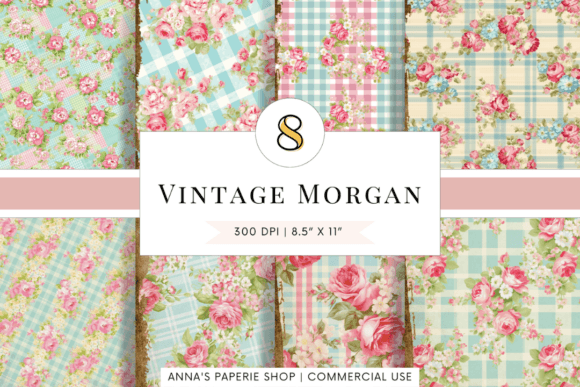
There is a specific warmth that comes from a vintage textile, a feeling of history and comfort that digital design often struggles to replicate. When we look at Shabby Chic Gingham Backgrounds, Retro, we are looking at more than just a pattern; we are engaging with a texture that tells a story. This collection is designed for the modern crafter who values the aesthetic of the past. It captures the essence of a well-loved farmhouse kitchen or a vintage dress pattern, offering a foundation that feels both nostalgic and fresh. The visual characteristics here rely on softness. Unlike sharp, modern geometric prints, these backgrounds feature a gentle decay. The lines of the gingham are not rigidly perfect; they have a slightly weathered look, mimicking the fading of a sun-bleached fabric. This imperfection is the core of the "shabby chic" appeal. It suggests that the design has lived a little, adding a layer of authenticity to your creative projects.
Visual Character and the "Lived-In" Appeal
The personality of the Shabby Chic Gingham Backgrounds, Retro set is undeniably approachable. It avoids the coldness of corporate minimalism. Instead, it invites the viewer in with a palette and texture that feels homemade. In the context of modern typography, this is what we often refer to as a textured background—something that supports a display font or handwritten font without competing for attention. The resolution is critical here. At 300 DPI, these are not low-quality web snippets. They are high-fidelity assets intended for physical production. The subtle grain in the JPG files ensures that when you print them for a junk journal or a planner, the ink sits on the page with the depth of a photograph rather than the flatness of a screen graphic. This quality makes them excellent design assets for anyone looking to bridge the gap between digital creation and tactile product.
Practical Applications: From Junk Journals to Brand Identity
Understanding where these backgrounds fit best is key to a successful project. While the prompt mentions junk journals and planners, the utility extends further into professional brand identity work. Imagine a bakery, a florist, or a boutique clothing line trying to establish a brand identity rooted in nostalgia. Using these gingham backgrounds in packaging design or social media graphics immediately signals a specific set of values: tradition, care, and organic quality.
For the content creator or blogger, these files serve as an instant mood setter. Instead of using a generic stock photo, you can use a Shabby Chic Gingham Background as the base for a quote card or a recipe post. It adds a layer of professionalism that generic templates lack. When considering editorial design, think about how the texture interacts with text. A serif font with high contrast often pairs beautifully with the soft grid of the gingham, creating a sophisticated, vintage magazine feel. Conversely, pairing it with a bold sans serif font creates a delightful tension between modern utility and retro charm—a technique often used in web design to make headlines pop.
Evaluating Fit and Hierarchy
When you download a set like this, you are acquiring a premium font of texture. Just as you would test a typeface, you must test your background. Place your primary text elements on the background and squint. Can you still read the hierarchy? The gingham pattern is a grid, which naturally aids in alignment. However, because it is a "retro" style, the contrast might be softer than a stark black-and-white grid. This influences readability. If you are placing light-colored text over a pastel gingham, you may lose legibility. A practical tip is to use a translucent overlay or a text box with a slight drop shadow to separate your message from the pattern.
Pairing and Consistency
The versatility of the Shabby Chic Gingham Backgrounds, Retro allows for various pairings. For a logo design project, you might find that a script font feels right at home, evoking the cursive signatures of the past. However, if the goal is a modern rustic look, a geometric sans serif font can ground the design. The key to consistency across a campaign—whether it is a series of hang tags or a full website—is to stick to one or two specific colors from the background set for your typography. This creates a cohesive visual language.
The Technical Edge: Print and Digital Reliability
One of the most overlooked aspects of creative font and asset selection is the file quality. We often see crafters and small business owners frustrated by pixelation when they move from screen to print. The 8.5" x 11" format at 300 DPI included in this collection solves that problem. It is print-ready. Whether you are creating a vintage hang tag for a craft fair or a full-page background for a planner insert, the file will hold up under the scrutiny of a physical printer.
Furthermore, the JPG format ensures broad compatibility. Whether you are using professional design assets software like Adobe Illustrator or consumer-friendly tools like Canva, these files integrate seamlessly. This accessibility is vital for the hobbyist who might not have a background in technical modern typography but has a clear vision for their project. The "ready to print" nature of the set respects the user's time, allowing them to focus on the creative application rather than technical troubleshooting.
Conclusion: A Foundation for Storytelling
Ultimately, the Shabby Chic Gingham Backgrounds, Retro collection is about storytelling. In a digital world that can often feel sterile, these backgrounds offer a tactile connection to the past. They are not just images; they are environments for your ideas. By choosing these textures, you are making a deliberate choice to add warmth, history, and a human touch to your work. Whether you are a marketer crafting a campaign for a heritage brand, a publisher designing a book cover, or a crafter personalizing a gift, these backgrounds provide the perfect canvas. They remind us that good design doesn't always have to be shiny and new—sometimes, the most engaging design is the kind that looks like it has been loved for years.